
Interior Finishes
Interior paint, explained room by room
Interior paint is a balance of appearance, washability, and how much light a wall reflects. Knowing what goes into the can helps you read labels with confidence.
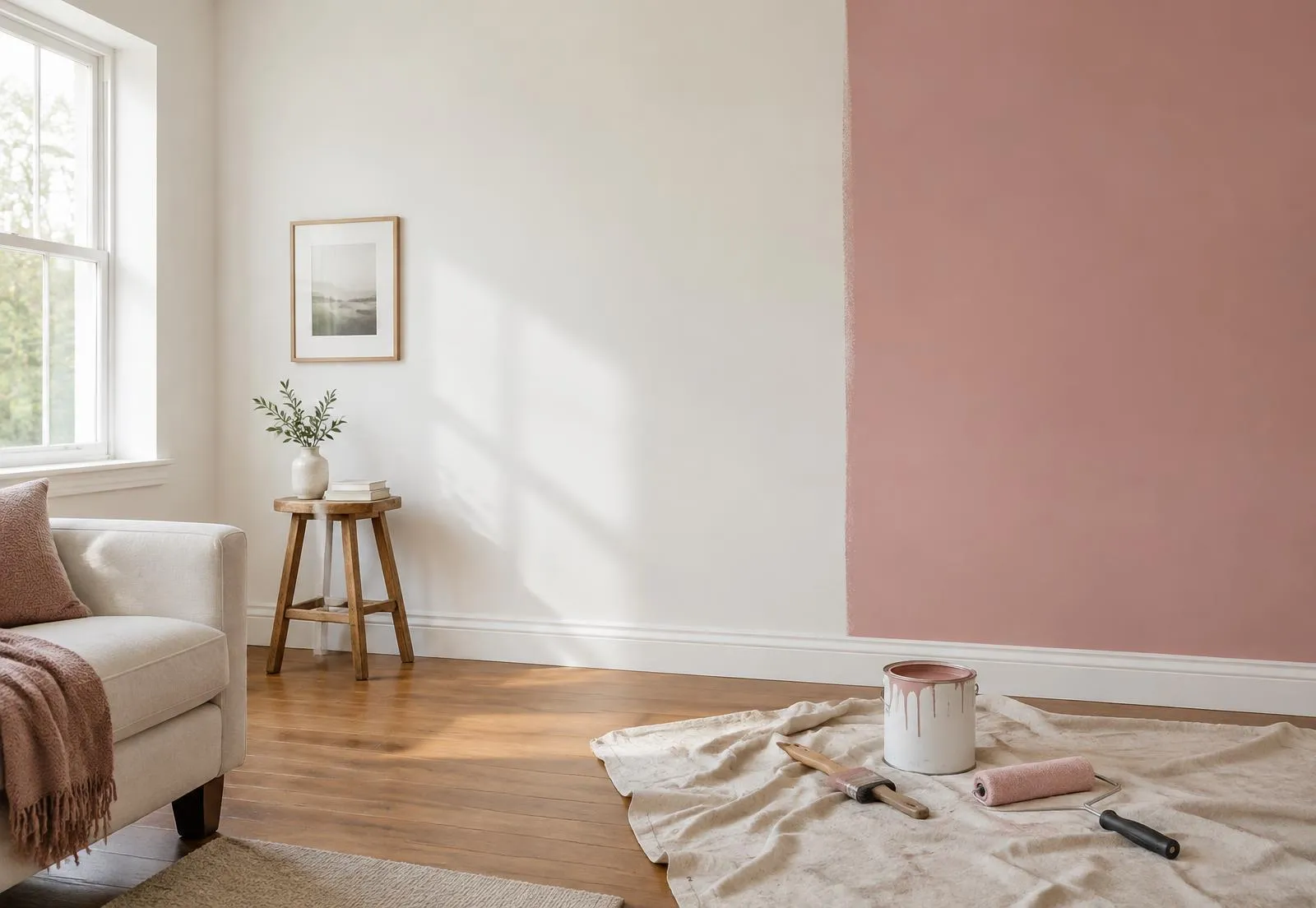
Water-based and oil-based paint
Most residential interior walls use water-based acrylic or latex paint. It dries quickly, cleans up with water, and stays flexible. Oil-based and alkyd paints level out smoothly and cure hard, so they are often discussed for trim and doors, though they dry slowly and need solvent cleanup.
Matching paint to the room
Each room places different demands on a coating.
- Bedrooms and living rooms: low sheens such as matte or eggshell hide minor wall flaws.
- Kitchens: satin or eggshell finishes tolerate gentle cleaning of splatters.
- Bathrooms: moisture-resistant formulas in satin or semi-gloss handle humidity better.
- Trim and doors: semi-gloss resists scuffs and wipes clean easily.
Reading a paint label
Labels typically list coverage per gallon, dry and recoat times, recommended application temperature, and VOC content. Following recoat times matters as much as choosing the right product, since rushing a second coat can affect adhesion and finish.